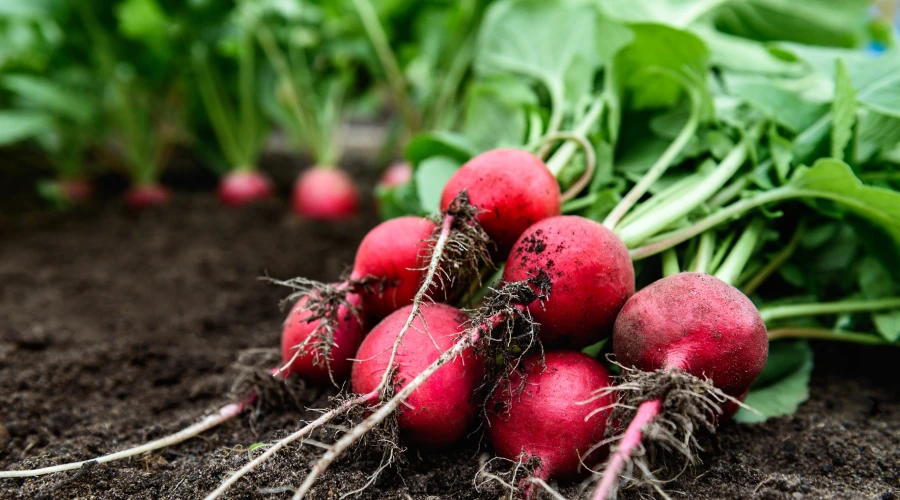
Radishes grow fast and don’t take much space, but they often bolt in hot weather or under long daylight. That’s why many gardeners only plant them in spring or fall.
In this guide, you’ll learn how to grow radishes continuously—from choosing the right seeds to planting, watering, and harvesting on time. We’ll cover what actually works in warm weather and how to avoid common problems like bolting, pests, and hollow roots.
- How to Start Growing Radishes in Your Garden or Containers
- How to Plant Radishes for a Steady Harvest All Season
- Caring for Radishes: Water, Pests, and Feeding
- When to Harvest Radishes
How to Start Growing Radishes in Your Garden or Containers
Radishes are easy to grow, but they still need the right spot to thrive—especially if you want crisp, juicy roots instead of flowering tops.
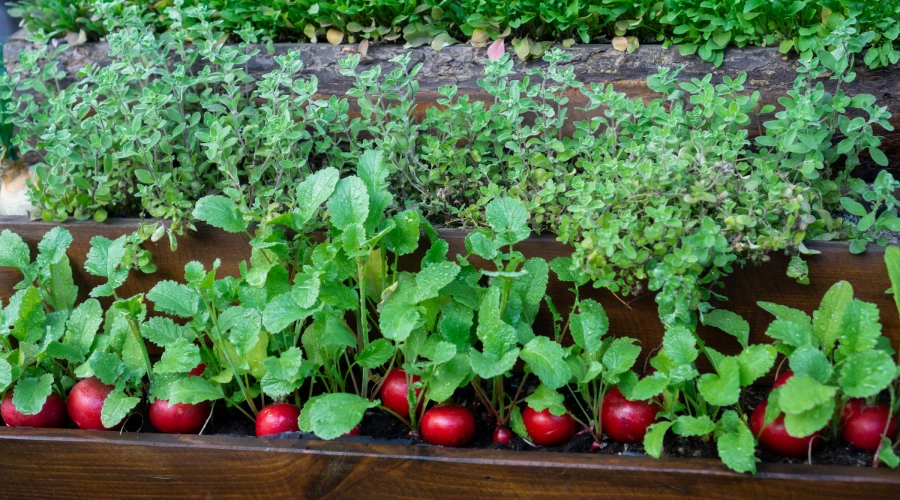
Where to Plant Radishes in Your Garden
- Sunlight. Find a Cooler Corner.
Radishes like sunlight, but not too much of it. In most parts of the U.S., including the South, long summer days can cause radishes to bolt (go to seed) before forming a proper root.
The ideal spot? A bed that gets morning sun and afternoon shade—for example, behind taller plants like tomatoes, peppers, or trellised cucumbers. You can also use shade cloth to reduce direct sun exposure to 6–10 hours a day. In cooler spring and fall weather, full sun is perfectly fine.
- Soil. Skip the Guesswork—Buy the Right Mix
Radishes grow best in loose, well-draining soil. If you’re using raised beds or containers, look for a vegetable garden mix labeled as sandy loam or loamy. These mixes are soft enough for roots to expand and hold moisture without getting soggy.
Avoid heavy garden soils or anything that stays wet for too long—radishes hate “wet feet.” If you’re planting directly in the ground, work in some compost to loosen up the soil and improve drainage.
- Companion Plants. Who Plays Nice with Radishes
You don’t need to give radishes their own dedicated bed. They grow well in shared space with leafy greens like lettuce, arugula, and spinach, as well as onions, garlic, and peas. These companions help reduce pests and make efficient use of your space. Just make sure your radishes aren’t shaded out completely by taller neighbors.
How to Plant Radishes for a Steady Harvest All Season
Radishes are one of the fastest-growing crops, but they still need a bit of planning—especially if you want to enjoy them for more than just a few weeks in spring.
Choose the Right Seeds
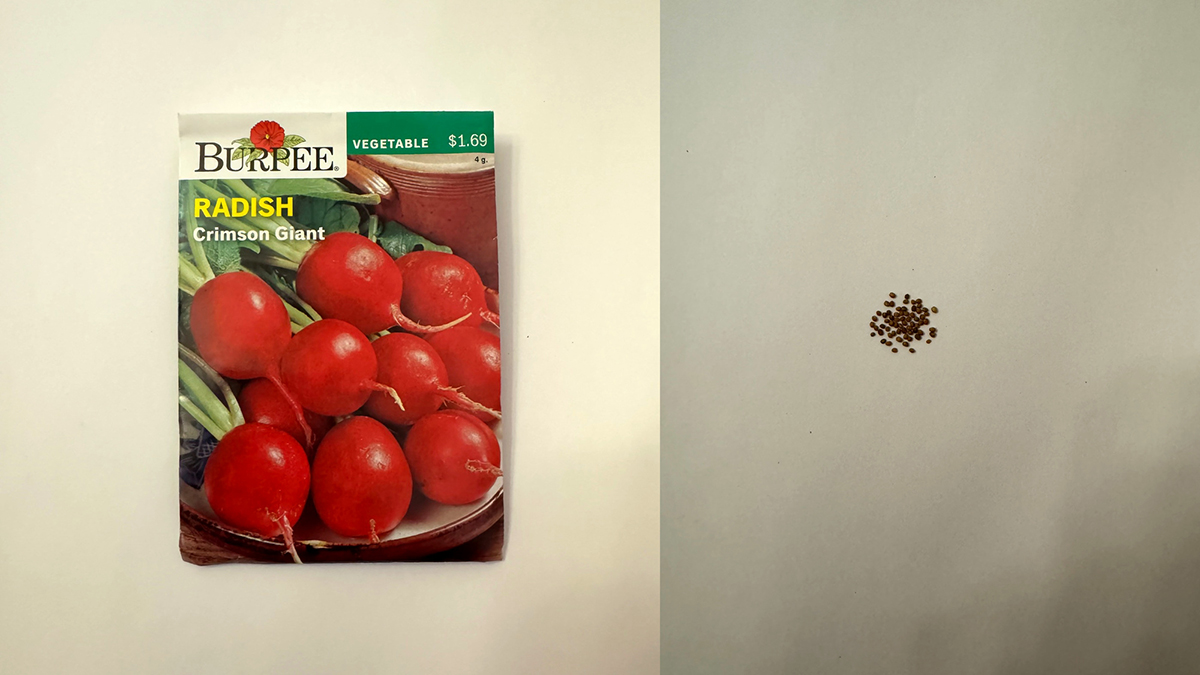
Not all radishes are created equal. For continuous growing, look for bolt-resistant varieties or those labeled “slow to bolt” or “heat-tolerant.” These are less likely to flower in warm weather and give you a longer harvest window.
Great Radish Varieties to Start With
- ‘French Breakfast’ – mild, crisp, and reliable
- ‘Cherry Belle’ – classic round red radish, fast to mature
- ‘Cherriette’ – fast-growing, bolt-resistant variety ideal for succession planting
- ‘Early Scarlet Globe’ – A classic variety known for its mild flavor and adaptability to various climates.
- ‘Watermelon’ – a sweet, mild heirloom radish with a white exterior and vibrant pink center, best planted in late summer for a fall harvest.
To make planting easier, consider buying pelleted radish seeds—these are coated to make spacing easier and reduce the need for thinning.
How to Plant
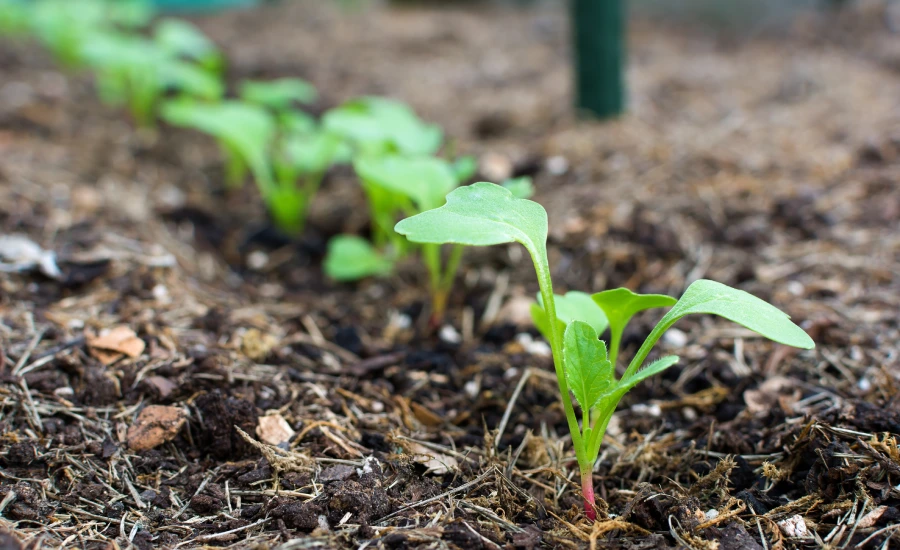
You can grow radishes directly in the ground, in raised beds, or in containers at least 6 inches (15 cm) deep.
- Prepare the bed. Loosen the top few inches of soil and smooth it out.
- Make rows. Use your finger or a stick to draw shallow trenches about 1 inch (2.5 cm) deep and 4 inches (10 cm) apart.
- Water before planting. Lightly water the soil so it’s moist, not soggy.
- Sow seeds. Place seeds about 1 inch apart. If using regular seeds, expect to thin them later. With pelleted seeds, you can space them more accurately from the start.
- Cover and press. Gently cover the seeds with soil and firm it down with your hand.
- Keep it going. For a steady supply, plant a new row every 10–14 days.
Most radishes mature in 20–30 days, depending on the variety and temperature. Harvest promptly—overripe radishes get tough and spicy.
Caring for Radishes. Water, Pests, and Feeding
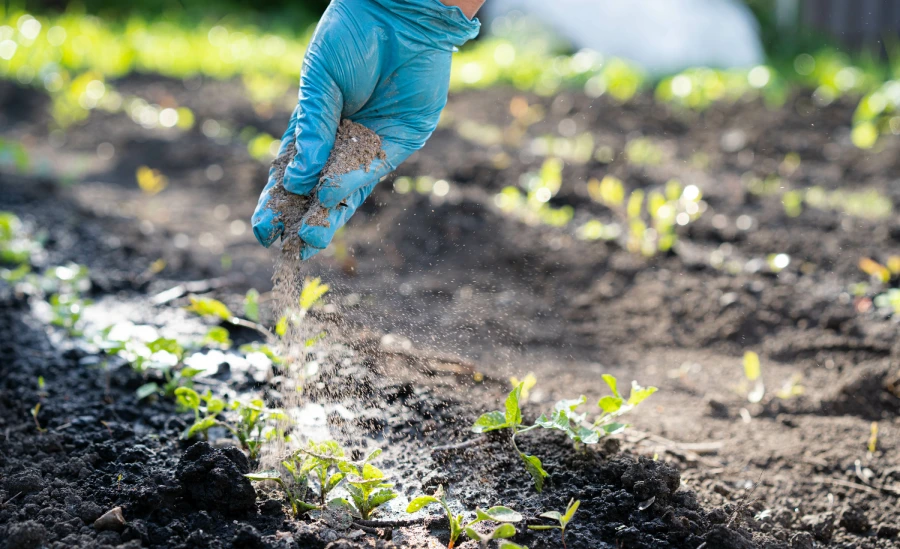
Radishes grow fast, but they still need some attention to stay crisp and flavorful.
Watering. Keep It Consistent and Simple
Radishes need even moisture to develop juicy roots. If the soil dries out, especially during hot spells, the roots can become tough or hollow. On the other hand, overwatering can cause rot.
The easiest way to keep moisture consistent is to use a soaker hose or drip irrigation system set on a timer to water early in the morning. If you water by hand, aim for once a day during hot weather or every other day when it’s cooler. Always water at the base, not over the leaves.
Popular low-effort options.
Pests. Be Proactive Early
Flea beetles and root maggots are the main threats to radishes. Because radishes grow quickly, you won’t use strong pesticides—but a few simple steps help.
- Use row covers (like Agfabric Floating Row Cover) right after planting to protect young seedlings.
- Dust the soil between rows with diatomaceous earth or sprinkle wood ash to discourage soft-bodied pests.
- Rotate crops — don’t plant radishes in the same spot season after season.
If leaves develop lots of holes or growth slows, harvest early and start a fresh round in a different bed.
Fertilizing. Only If Needed
If you’re using fresh, high-quality soil (like a raised bed mix with compost), your radishes probably don’t need extra fertilizer.
Use a fast-acting, balanced water-soluble fertilizer (like Miracle-Gro Performance Organics All Purpose Plant Food) only if the leaves turn pale or growth seems weak. Apply once, early in growth, and avoid anything high in nitrogen—too much leaf growth means smaller roots.
When to Harvest Radishes
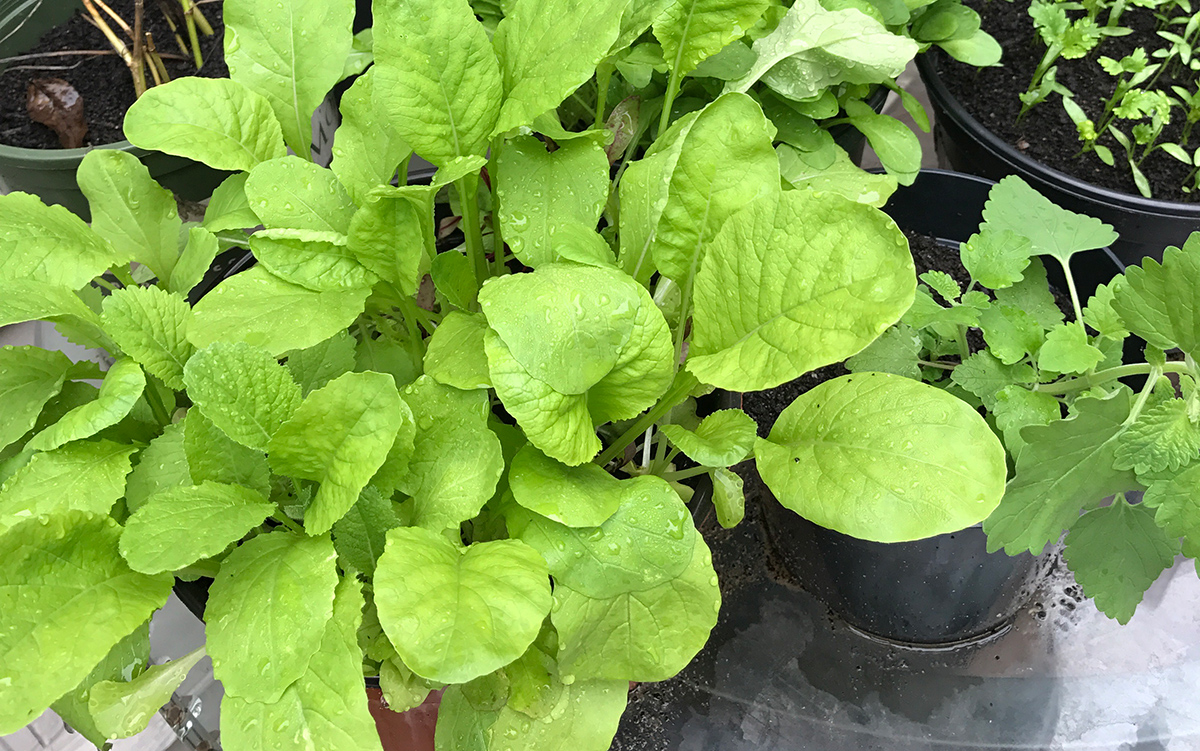
Radishes grow quickly, and timing is everything if you want them crisp and mild—not woody or bitter.
Most varieties are ready to harvest 20–30 days after planting, but don’t rely only on the calendar. Here’s how to tell they’re ready.
- Look for shoulders (tops of the roots) slightly poking out of the soil. If you see a round, firm shape about 1 inch (2.5 cm) in diameter, it’s time.
- Gently pull one and check the root—if it’s the right size and texture, harvest the rest over the next few days.
- Don’t wait too long—overripe radishes become spongy, woody, or overly spicy.
In warm weather, radishes mature faster, so start checking around day 20. If you’re not sure, it’s better to harvest early than too late—you can always replant another round.
Final Thoughts
Growing radishes continuously through the season takes some experimenting. What works well in one bed or climate might not work as smoothly in another. One variety may thrive in your soil and light conditions, while another bolts too early or stays small.
Don’t be discouraged if your first try isn’t perfect. Radishes grow fast, so each planting gives you a new opportunity to fine-tune your timing, spacing, and variety choice. Try different types, observe how they respond, and adjust as you go. It’s a low-risk, high-reward crop that makes learning fun—and tasty.