Is Matte or Gloss Laminate Flooring Better?

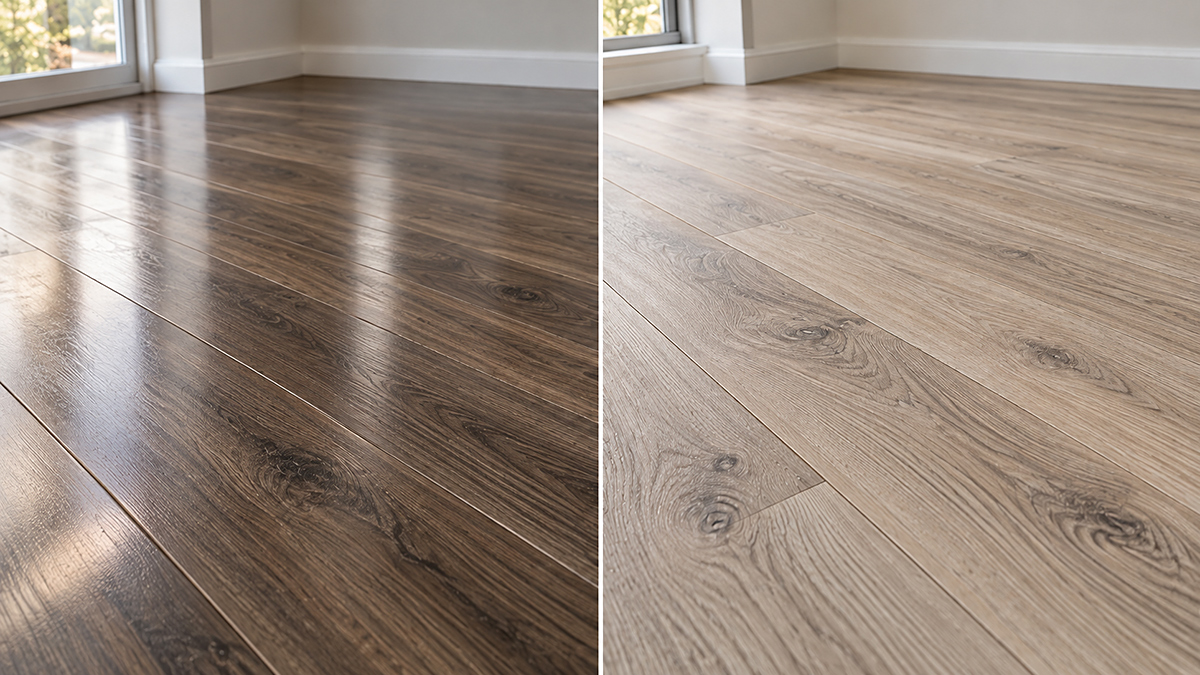
Laminate floors are becoming an increasingly popular option for residential and commercial floors. Laminates have all the beauty of wood but are much easier to maintain and clean. Laminates come in various designs and styles, but buyers are often uncertain regarding which finish suits their lifestyle best. High gloss finish has a 45%-75% reflective luster and offers a sophisticated visual appeal. The gloss effect is classic and suits formal settings. Matte finishes are more rustic and suit higher foot traffic areas with children and pets. Laminate floors are a great alternative to the high cost and maintenance of hardwood floors and come in endless styles and varieties. However, when choosing which best suits your lifestyle, you should consider which finish is best.
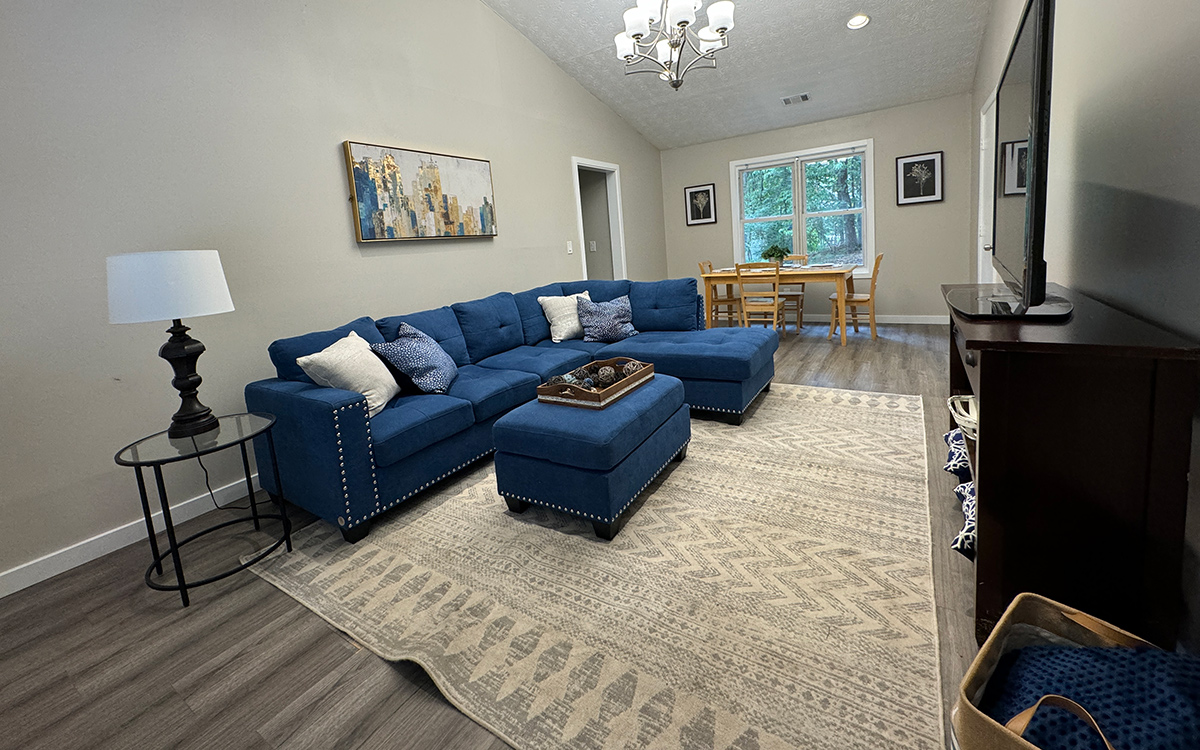
In this article, you’ll learn more about the different finishes for laminate flooring, the key differences between gloss and matte, their pros and cons, and how to choose the best option for your home.

What is Sheen on Laminate Flooring?

Although many homeowners spend plenty of time considering their floor surface design, not many put as much thought into which sheen best suits the area to be floored. The level of shine has a substantial impact on the aesthetics of your chosen surface, as well as the practical effects of daily uses. The sheen of your laminate reflects light, and like a mirror, the surface will reflect more light the higher the sheen of the finish. Your floor sheen determines whether your floor will absorb or reflect light and is divided into high gloss, semi-gloss, satin, or matte.

High Gloss Laminate Flooring

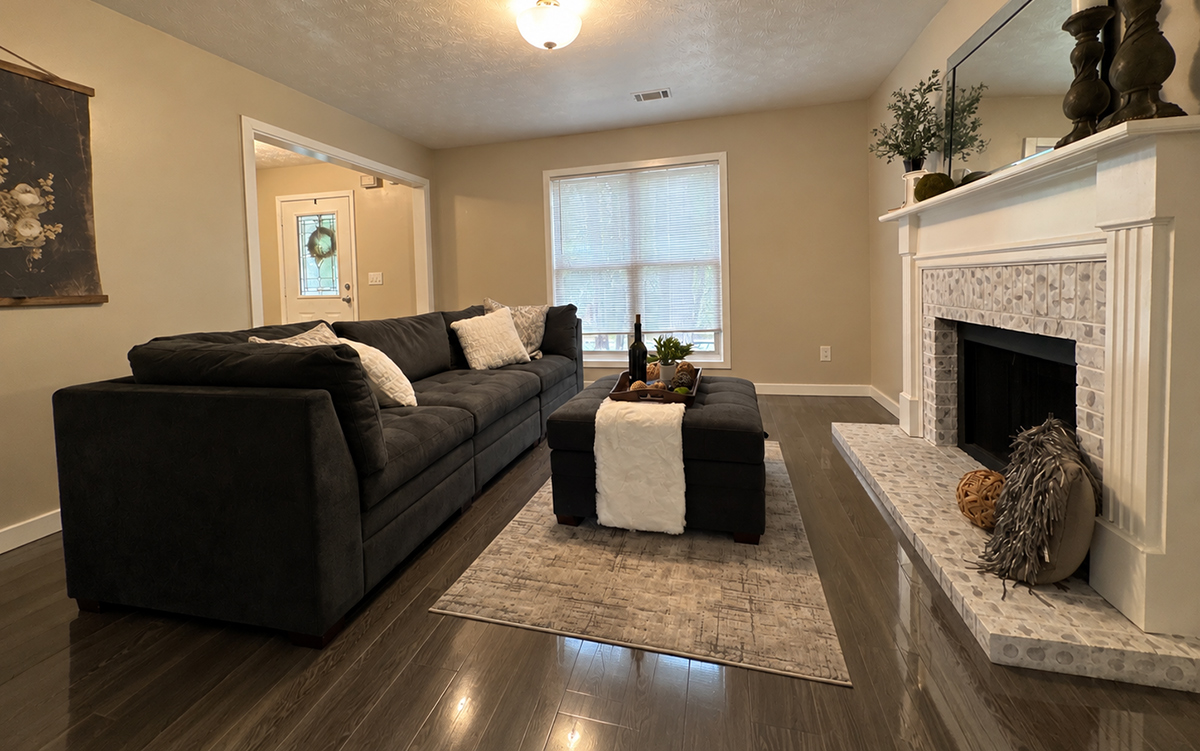
High gloss laminate flooring reflects the most light and creates an almost wet look with a luster of 75% or above. High gloss laminate sheens have been likened to a piano finish with a mirror-like reflective polish. The high gloss option is not the most popular due to its susceptibility to marks and scratches. High gloss wear is particularly noticeable between regions of low and high traffic over time.

Semi-Gloss Laminate Flooring

Semi-Gloss sheen has a reflective shine of 45-55% and works well in ultra-modern settings and sleek and styled areas. The semi-gloss suits areas such as kitchens and dining areas where there may be water nearby. Although semi-gloss brightens a room and makes for sleek aesthetics, it can be unforgiving of dirt, debris, scratches, or dents. It needs a regular cleaning schedule to ensure that they retain their smooth dimensions.

Satin Finish Laminate Flooring

Satin laminate finishes are a popular choice with a sheen of between 35-40%, which form a middle ground between gloss and matte finish. Although the effect is still classic and elegant, the floor is much easier to maintain and cleaner than the higher gloss options. The satin finish is more forgiving of dirt and scratches, and high traffic areas are less noticeably visible than the higher gloss options. The lower reflective sheen sets off decor and does not overwhelm a windowed space with light.

Matte Finish Laminate Floors

Matte finishes are popular in busy households with pets or children and reasonably high foot traffic areas. Matte hides the scuff and scratches best of the three finish options and has 10-25% luster, and reflects a minimal amount of light. The matte finish has a look of casual sophistication and does not shine even after being cleaned. Matte finish lends itself well to wood laminate and has a more organic wood look than the gloss finishes.

Pros of Matte Finish Laminate Flooring

Unlike gloss finishes, matte-finish laminate floors are resistant to wear and tear and stand up well to scratches, dents, and visible foot traffic wear. Matte finishes lend themselves to informal spaces such as kitchens and hallways and lend themselves to a more rustic and lived-in feel and suit both commercial office spaces and family homes. With a luster of 25% or less, the imitation wood absorbs more light and appears more natural and organic.

Benefits of Matte Finish Laminate Flooring

  • Great for family homes.
Matte finishes won’t show scratches or wear because it absorbs much of the light that highlights imperfections. It is well-suited for children’s bedrooms and kitchens, bathrooms, and hallways with high traffic. Dogs’ claws are notorious for leaving scratches on high gloss laminate, and a matte finish prevents your pets from slipping and sliding, which increases the claw marks considerably.
  • Color richness.
Matte flooring does not reflect light like its gloss opposite, so light becomes more diffuse, and color saturation is visibly enhanced. Color consistency appears more uniform and can make for a more dramatic visual effect.
  • Lower maintenance.
Because the matte finish does not reveal dirt, prints, and debris as much as gloss, your cleaning routine can be a bit more relaxed than gloss finish floors.
  • Safer than high gloss.
High gloss finishes are notoriously slippery, even when dry. Especially in no-show homes, high gloss finishes can be a slipping hazard. A matte finish can support grained or scraped textures that allow a firmer grip on the floor surface and prevent falls.

Cons of Matte Finish Laminate Flooring

  • A matte finish can make a room appear smaller.
Matte finish laminate floors absorb ambient light and make a room appear smaller, especially if it is a darker colored laminate.
  • Not well-suited for ultra-modern homes.
The matte finish laminate is more suited to a rustic, country-style home or office due to its more natural wood surface. It makes colors more prominent: The matte laminate’s non-reflective surface may cause a floor color to dominate a space visually, especially if the colors are on the darker spectrum.

Pros of Gloss Finish Laminate Flooring

Gloss laminate finishes are modern and sophisticated and lend themselves to more formal dining rooms and living rooms. The downside to the sophisticated ambiance of high sheen laminates is that they are unforgiving of the dirt and debris, smudges, and scratches of everyday wear and tear.
  • Aesthetically appealing.
High gloss sheens can use their reflective capacity to transform smaller living areas into a light and open visual appeal.
  • Gloss lends a sophisticated air to formal areas.
The high sheen of gloss laminates is an elegant choice for house areas such as dining rooms and living rooms.
  • Gloss can be used in high moisture areas.
Gloss laminate flooring is spill and splash resistant due to the waterproofing lacquer used as a surface barrier.

Cons of Gloss Finish Laminate Flooring

  • It can be a slipping hazard.
Gloss finishes are notorious for their slippery surface, even when dry. It is not ideal for high foot traffic areas or bathrooms.
  • Gloss shows dirt and debris easily.
The reflective nature of glossy laminate flooring makes it highlight any surface imperfections or dirt. Glossy laminates also show wear and tear more easily between high foot traffic and low traffic areas in the office or home.
  • Prone to scratches.
The smooth wood surface of a gloss laminate is not ideal for busy family areas with pets and children as it highlights scratches, stains, and scuffs very easily.
  • Increased maintenance.
Gloss laminates need to be cleaned more often than matte laminates due to increased visibility of dust and prints.

How is Laminate Flooring Made?

Laminate floors are sometimes called wood laminate floors. However, generally, they only use pressed wood particles in their core or have the appearance of wood due to the highly realistic image layer. The image layer mimics the aesthetics of wood in a photograph-like layer encased by a transparent protective overlay. The numerous layers that make up a laminate floor are fused in a high pressure, high-temperature process that results in a solid flooring piece. There are two main ways of constructing a laminate floor which are the direct pressure (DP) and high pressure (HP) methods.

Direct Pressure Laminate

Direct pressure laminate typically has four layers.
  • The Stabilizing/Backing Layer.
This layer is at the bottom of the laminate and provides stability to the backing board. Many laminates offer a moisture barrier on the backing layer’s surface that encloses the core material in a watertight seal.
  • Core Layer.
The core layer provides the depth and structure and provides stability for the surface layers. It is typically made of High-density Fiberboard (HDF), made up of wood fibers combined with a resin binder and formed in panels under high pressure and heat. The core layer also functions to dampen sounds such as footfalls and softening walking impact.
  • The Decor Layer/Photo Layer.
This is a decorative paper sealed with a melamine resin. This layer gives the laminate its distinctive appearance and can mimic wood, stone or marble, or even paint effects. The photograph allows images such as wood grain to follow a repeated pattern to enhance your home’s aesthetics.
  • The Overlay/Wear Layer.
The overlay is a resin-based clear coating that forms the uppermost layer of the laminate and provides the walking surface. It is typically made from melamine or aluminum oxide to provide a durable outer coating to protect the floor from moisture, scratches, UV damage, and fading. The overlay provides a selection of sheens or finishes such as high gloss, semi-gloss or matte. These sheens are fused in a high-pressure process of 600 lbs per square inch at temperatures of 400℉. The upper layers and lower layers are pressed together around the core layer in the direct pressure process.

High-Pressure Laminate

The high-pressure laminate process teats the backing and upper layers separately before fusing them directly to the core. Typically the HPL process adds the fifth layer, which presses the photo layer and overlays onto a high-strength paper. The layers are only then pressed in the core layer under a secondary high-pressure laminate process. This process makes a much stronger laminate and is suited to high traffic areas with increased wear and tear. The HPL laminate can be made to various thicknesses of increasing durability and cost ranging from 6mm to 14mm thickness. Because the HPL process is more labor-intensive, it is a more expensive option than the DPL system. Once the HPL or DPL lamination process is completed, the manufacturer has the option of imprinting a variety of textures onto the sheets to mimic the photo/decorative layer and enhance the authenticity of the surface. The manufacturer uses specialized machinery to cut the laminate into tiles or planks and provides the tongue and groove locking system into the edging.

What Are AC Ratings?

For most homes, look for AC3 or AC4 laminate. AC3 is enough for bedrooms, living rooms, and other normal-use areas. If you’re flooring a busy hallway, entryway, kitchen, or an open space that gets a lot of foot traffic, AC4 is a better choice and is easy to find in residential laminate today. AC5 is usually more than a typical home needs. It makes more sense for commercial spaces or other areas with unusually heavy traffic, so there’s little reason to pay extra for it just because the number is higher. The AC rating tells you how well the surface stands up to wear. It does not tell you how waterproof the floor is or how easily it will scratch or stain. If you’re comparing two similar floors, check those specifications separately.

NALFA Certification

If you’re comparing two similar laminate floors, NALFA certification is a useful extra check. An AC rating mainly tells you how well the surface handles wear, while NALFA certification covers a wider range of performance tests. For a home, look for flooring certified for Residential use. You don’t need to choose a Commercial or Heavy Commercial product just because the rating sounds better. What matters is that the flooring is approved for the kind of use it will actually get.

Where to Look for Matte and Gloss Laminate

Low-sheen laminate is much easier to find now than a true high-gloss floor. Most current wood-look collections lean toward matte, ultra-matte, or low-lustre finishes, so shoppers who want a glossy floor will have fewer styles to choose from. Floor & Decor is one of the places where both ends of the spectrum are still represented, with current waterproof laminate listed in high, low, and ultra-matte finishes. Once you know which finish you prefer, these are the brands and collections I would compare.

Mohawk RevWood Premier

RevWood Premier is a good place to start when the goal is to make laminate look as close to real wood as possible. Mohawk uses detailed surface texture and GenuEdge pressed bevels, so the grain and plank edges have more depth than you usually see on inexpensive laminate. Current Premier products are 12 mm thick and use WetProtect for water protection. I would look at RevWood mainly for the appearance. It is sold largely through flooring dealers, so prices are not as easy to compare online, and the Premier products I checked do not include attached underlayment. Flooring dealers and installers also continue to mention RevWood Premier as one of the stronger choices when someone wants a realistic wood look rather than a typical printed laminate surface.

Shaw Pet Perfect Laminate

Shaw makes sense if you already know you want a very flat, natural-looking finish. Its current Pet Perfect laminate uses an ultra-matte surface with embossed-in-register texture. Shaw also rates the line for scratch resistance and waterproof protection, which makes it especially relevant in homes with pets. The trade-off is choice. Shaw’s U.S. laminate catalog is much smaller than it used to be and currently centers on three Pet Perfect styles: Komondor, Oak Crest, and Oak Grove. Manufacturer-listed material prices currently start around $4.99 per square foot and go higher depending on the collection.

Mannington Restoration Collection

Mannington is one I would look at when you want some softness to the finish without a completely flat appearance. Its Restoration Collection uses a Low Lustre finish on styles such as Harmony, along with embossed-in-register texture. Harmony is 12 mm thick and uses as many as 20 unique plank visuals, which helps keep the same wood pattern from repeating too obviously across a large room. The Restoration Collection is also much broader than a single style. Mannington currently lists 36 designs, so there is more room to choose the wood pattern and color without changing to another product line.

AquaGuard Performance

AquaGuard is particularly useful for this comparison because you can actually shop different sheen levels in one place. Floor & Decor currently sells AquaGuard Performance in a large range of waterproof laminate, including high-gloss, low-gloss, and ultra-matte options. The ultra-matte NatureMatch styles use embossed-in-register texture, while the broader AquaGuard Performance line is mostly 12 mm and carries an AC5 wear rating. It is also the easiest of these options to price before going to a store. Current AquaGuard products are commonly listed around $2.49 to $3.99 per square foot, depending on the style. That makes it useful not only as a budget option, but also as a place to put an ultra-matte sample next to a glossy one and see which surface you actually prefer. Before ordering a full floor, take the samples home. A glossy sample that looks subtle under store lights may reflect much more next to a large window, while a very matte surface can look flatter or darker than expected in a room with little natural light.

Wrapping Things Up

Matte and gloss laminate can both work well, but they suit different homes. Matte hides dust, small marks, and everyday wear better, while gloss reflects more light and gives the floor a cleaner, more polished look. Before buying, check the finish in person and compare it with the room’s lighting. Then look at the AC rating, water resistance, warranty, and the manufacturer’s recommended use. The finish changes how the floor looks and how much maintenance it seems to need, but it does not tell you everything about the quality of the laminate.

Enjoyed the Article? You Might Also Like

Share the Post:

Related Posts