Laminate flooring ranks among the top choices for home flooring. Let’s explore this material’s unique features and highlight the key attributes that ensure a durable floor.
- What Matters When Choosing Laminate
- Installation Location
- Laminate AC Rating
- If You Have Pets
- What to Know About Waterproof Laminate
- What Laminate Thickness Should You Choose?
- What to Know About the Warranty
- Do You Need Underlayment?
What Matters When Choosing Laminate
A laminate floor lasts when its wear resistance, moisture protection, and installation are right for the way the room is actually used. A thicker or more expensive plank isn’t automatically a better choice.
We’ve used laminate in both our own home and rental properties because it can be durable, practical, and reasonably priced. What matters is choosing the right combination of features for the space rather than simply buying the most expensive option.
Laminate is made of several compressed layers, including a fiberboard core, a printed design layer, and a protective wear layer. When comparing products, however, the most useful things to look at are the AC rating, water resistance, thickness, warranty, and installation requirements.
Below, we’ll break down what each of these means and how to choose the right combination for your home.
Installation Location
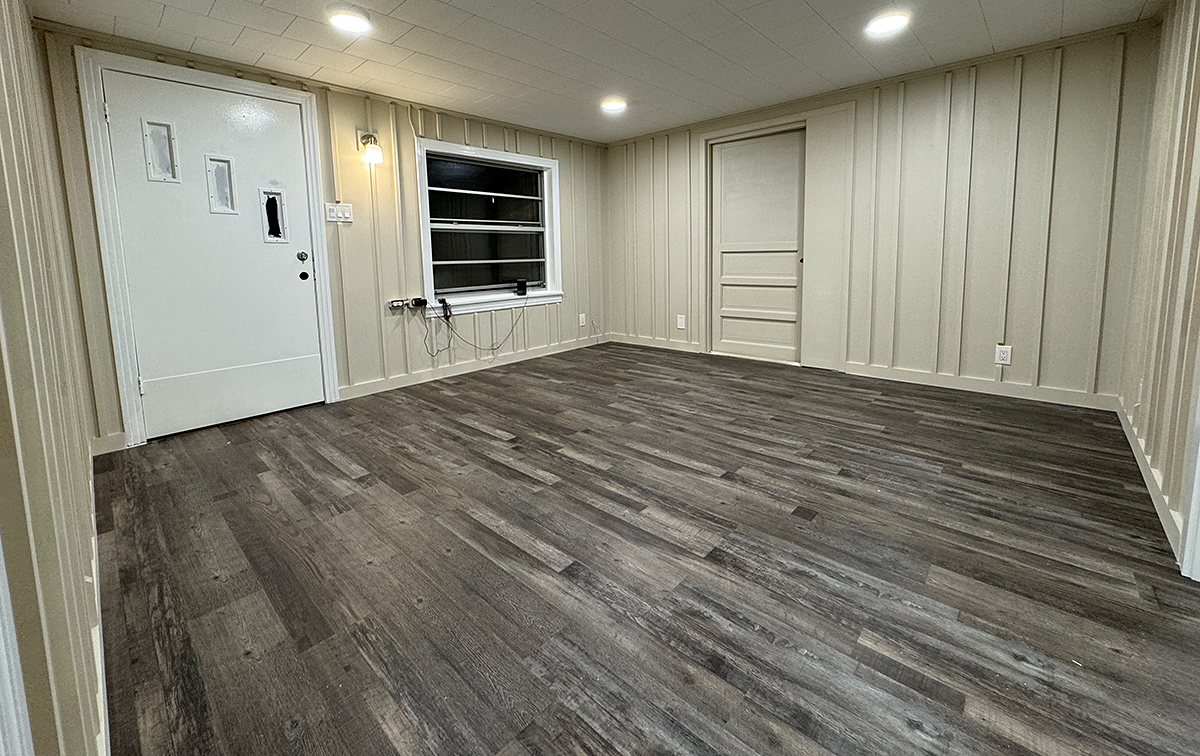
Start with where the flooring will be used. Different rooms put different kinds of stress on laminate: hallways and entryways get more foot traffic and grit, while kitchens add a greater risk of spills and moisture.
If you want to use the same laminate throughout several rooms, choose a product that can handle the toughest conditions among them, not just the average room.
For wear, one of the first specifications to check is the AC rating.
Laminate AC Rating
The AC (Abrasion Class) rating tells you how well the surface of laminate flooring resists wear from foot traffic and everyday abrasion. The higher the number, the greater the wear resistance.
Think of AC as a wear rating, not an overall quality rating. A higher AC rating does not automatically mean the flooring is more waterproof, more scratch-resistant, better at handling impacts, or likely to last a specific number of years. Those are separate characteristics that should be checked separately.
| AC Rating | Wear Level | What It Means for a Homeowner |
| AC1 | Light residential wear | Made for very lightly used spaces. There is usually little reason for most homeowners to seek it out today. |
| AC2 | Moderate residential wear | Suitable for lower-traffic areas of the home. |
| AC3 | Heavy residential wear | A practical starting point for most homes, including busy living areas and hallways. |
| AC4 | Higher wear resistance; commonly used for moderate commercial traffic | Can make sense in very busy households, rental properties, or when the price difference from AC3 is small. |
| AC5 | Heavy commercial wear | More wear resistance than most homes need. Don’t pay extra for it unless the rest of the flooring also fits your needs. |
For most homes, we would start with AC3 rather than automatically buying the highest rating. If the house gets a lot of traffic or you’re choosing flooring for a rental property, AC4 can be a sensible upgrade. AC5 is usually more than a typical home needs.
Most importantly, don’t use the AC rating to decide whether a laminate is suitable for a kitchen, bathroom, or another moisture-prone space. An AC3 floor, for example, may have plenty of wear resistance for a kitchen, but you still need to check its water protection separately.
Good to know. You may also come across AC6, but it represents an extremely high level of wear resistance and isn’t something most homeowners need to look for.
If you want a broader indication of performance, look for NALFA certification. Unlike the AC rating alone, NALFA certification evaluates laminate across multiple performance areas, including wear, impact, moisture, stain resistance, and dimensional stability.
If You Have Pets
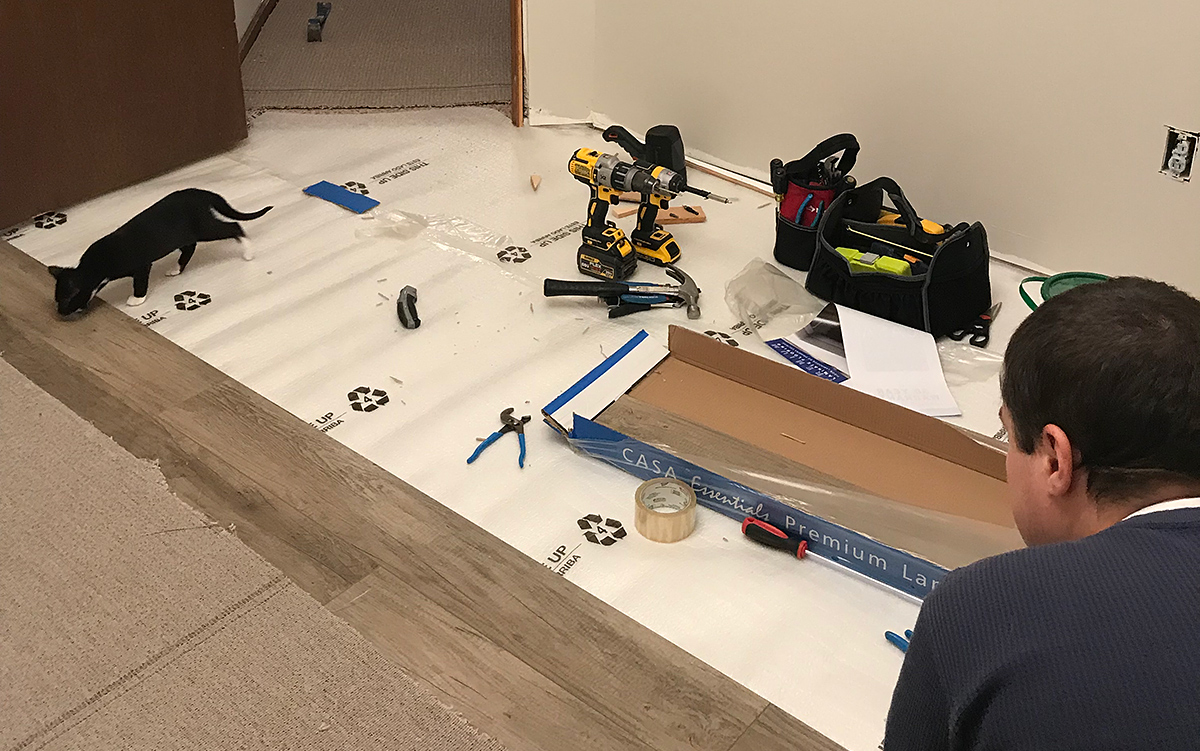
If you have pets, don’t choose laminate by AC rating alone. AC tells you about surface wear, but pet claws, accidents, and spilled water create different problems.
Look for flooring that is scratch-resistant and suitable for homes with pets. Check the warranty to see whether it covers pet scratches, stains, or accidents. Water protection is also important, especially with puppies, older pets, or water bowls.
Some laminate lines offer separate pet scratch and water-damage warranties. Those details are more useful than a general pet-friendly or durable label.
What to Know About Waterproof Laminate
Many laminate floors today are sold as waterproof or water-resistant, but those claims vary by product. If you’re considering laminate for a bathroom, laundry room, basement, or another moisture-prone area, check that the specific product is approved for that location and follow its installation requirements.
From our experience, we still wipe up spills as soon as possible, even with waterproof laminate. Small installation imperfections can leave vulnerable spots, and after years of use, joints and seals may not protect the floor as well as they did when it was new.
What Laminate Thickness Should You Choose?
For most homes, 8 to 10 mm laminate is a practical choice. An 8 mm floor is usually enough if you want to keep costs down, while 10 mm can feel a little more solid and quieter underfoot.
Choose 12 mm if the price difference is small and you prefer a heavier, more substantial feel, but don’t pay extra for thickness expecting better wear or water resistance. Those depend on other specifications, including the AC rating and water protection.
What to Know About the Warranty
Don’t choose laminate just because it comes with a long or lifetime warranty. Flooring warranties often have detailed requirements for installation, moisture, and everyday use, so the length of the warranty doesn’t tell you much by itself.
Keep the receipt and a few leftover planks after installation. If you ever need to make a claim, the manufacturer may ask for proof of purchase, photos, or a flooring sample.
Do You Need Underlayment?
Many laminate floors already come with an attached pad, so check the product specifications before buying underlayment separately.
If there is no attached pad, use the type recommended by the manufacturer. For installation over concrete, also check whether a moisture or vapor barrier is required.
Don’t add a second layer of underlayment unless the flooring manufacturer specifically allows it.
The Rest Comes Down to Installation and Everyday Use

We’ve found that even an expensive, high-quality laminate can be ruined, while a reasonably priced floor can last for years. Choosing the right product is only part of the equation. Good installation matters just as much, and after that, much of the floor’s lifespan depends on how it is used.
Repeated spills, too much water during cleaning, a steam mop or wet-cleaning robot that isn’t approved for the flooring, and small problems left unrepaired can all shorten its life. Fix leaks or damaged areas early and follow the manufacturer’s care instructions for the specific floor you installed.
A well-chosen mid-range laminate that is installed correctly and treated properly can outlast a more expensive floor that isn’t.
Enjoyed the Article? You Might Also Like
- Choosing the Right Transition Strips for Laminate Floors
- How to Choose the Right Wood Flooring for Your Home
- High Gloss vs. Matte Laminate Flooring (Pros, Cons, Cost)
- Shaw Laminate Flooring Review: An Honest Review (2025)
- Mohawk Laminate Flooring Review (14 Pros & Cons)
- Trafficmaster Laminate Flooring: An 2025 Updated Review